Saturday, 15 October 2016

Updates to Portfolio

It has been a while since I updated this blog of mine, the last post being in July after I bought Falcon Energy. So three months later, what has changed with my portfolio? Well, below are the three main things I would like to talk about in this blog post, to keep myself and you updated.

DCA on STI ETF

Since June this year, I've start contributing a small amount of money into dollar-cost averaging of STI ETF. This was done through POEMS ShareBuilder Plan. Though the fees were relatively higher than say POSB InvestSaver, I mitigated this consideration by pooling money with my siblings and buying it together. This way, the commission by percentage is comparable to POSB InvestSaver and I also get to enjoy the reinvestment option of dividend issued. 


Every drop of water contributes to the ocean. Buying STI ETF religiously every month will hopefully contribute to my retirement fund 40 years down the road. 

Bought more Falcon Energy


Hindsight is always 20/20. Before the results announcement, share prices were ranging as high as 19 cents - allowing me to exit with some profit. However, thinking it was a start to bull run in O&G, I decided to hold on. Without a dividend, coupled with the deterioration of the industries (think Swiber and Swissco's bond default), Falcon Energy was also brought down. 

However, its full year results were decent still and it left a big question mark for me. 4.92 US cents translates to a P/E of less than 3 leh! Cash generated from operations was US$111,747,000. There was a net decrease of cash because of hefty repayment of borrowings, which was the right thing to do in this environment where debt brings down O&G companies. Reflects the prudence of the management, to be frank. 

A strong argument I had previously was Falcon Energy stake in CH Offshore. CH Offshore's stock price had tanked recently and as of now stands at $0.29. This stake in CH Offshore translates to a value of $177M for Falcon Energy. Funny how at $0.16, Falcon Energy is valued at $129M. So, core business of Falcon Energy is valued at -$50M? 

With this, I've decided to further another round at $0.166. There are a few risks I am aware of and would highlight here for reference. 

1) Protracted depressed oil prices. Similar to the shipping industry, this would probably kill off many O&G companies. While the P&L looks good now, experience says that the bottomline will turn red in a quarter. 

2) CH Offshore revalues. A main reason why I invest in Falcon Energy was the stake in CH Offshore. It is not entirely impossible that CH Offshore becomes a penny stock, rendering its stock worthless. Then, what value to talk about? However, keep in mind CH Offshore does not hold significant borrowings and thus less likely to go under compared to say Ezra. 

3) Interest rate rises fast. In the annual report, every 50 basis points increase in interest rate will decrease Group's profit by US$801,000. US is increasingly likely to raise rate further this year. 

Planning to Sell Karin Tech

Should I....? Debating hard on this one, but already queueing at $0.315 to sell. 

Between China's diminishing economy, lowest EPS ever, and statement like this..,

"After the disposal of KCF A Store Limited, it is not expected the CEP segment will be able to fill the revenue and profit shortfalls in the near future even though the Group has been adding various prestige consumer electronics products into its product mix."

Totally feel like relieving myself of this company. The only thing holding me back from selling is the 7% dividend that was declared along this set of horrendous result. The management totally knows how to keep its shareholder. This is also apparent in its annual report where it shows that the company has already paid out 126% of the IPO price in dividend (within 10 years). Omg, if I hold for 10 years, will I be getting "free" shares as well?

Previously, I was scared that dividend paid out is no big deal as prices drop after the dividend was paid out anyway. But k1 Ventures totally proven me wrong on this point. Therefore, I am totally undecided.

Fundamentally, I should be getting out while stock prices are held up by the dividends. Emotionally, what about the dividends!!! T__T Help pls? 

Tuesday, 5 July 2016

Falcon Energy (5FL.SI)


Falcon Energy (5FL.SI) - One of the forefront in offshore marine and also O&G sector. It is divided into 5 business sectors namely, Marine, Oilfield Services, Drilling Services, Resources Division and one more that I couldn't find (LOL!). All this, you can read from their company website. Essentially, Falcon Energy feels like Nordic Group which provides O&G support services yet has a more direct exposure to oil prices through the Drilling Services and Resources Divisions.

I started searching for an O&G company as I wanted to gain some exposure to the potential oil price movements. Truthfully speaking, I did not do any deep research into oil prices. But seeing how far it has come down and the relative stability now, I wanted to capture some gains when the industry move into the up-cycle again. And I chanced upon this stock - a rare profit-making O&G company amidst the gloom and doom. Below are some of the points I like about this company:

1. Financial Metrics

Easiest go-to method to valuate a company from the surface. Was really too lazy to predict cash flows with expected oil prices etc. The ratios I calculated were really impressive till I started to doubt the going concerns of the company (the ratios were like that of a distressed company)!

Based on the time I did my calculations, where the price was at 17.2 cents and data obtained from the latest FY report,
EPS: 6.45 US cents
P/E: 1.975
P/B: 0.348
Debt/Equity: 0.9854
Dividend: $S 0.005 (2.9% yield interim)

In this set of data, it only seem that debt-to-equity ratio is high. I give it leeway as it is expected for O&G company to have significant debt, especially in these trying times. In addition, this 2016 figure is actually lower than 2014 and 2015, having paid off a sum of debt in the latest quarter. P/E and P/B is super impressive and actually needs no explanation. In the final dividend, I will guess that another half cent of dividend will be given out, ending with a near 6% yield. Warren Buffet had always like to buy stocks with significant higher book value and I actually think Falcon Energy fits the criteria.

2. Stake in CH Offshore

Falcon Energy actually owns 86.7% stake in CH Offshore, another listed firm on SGX. When I was doing this research on Falcon Energy, the market cap of the company was 139.2M while that of CH Offshore was 282M (sitting at 275M as of 06/07/16). This means the stake Falcon Energy has in CH Offshore is worth at least 244.5M! That's right, the market is selling the core operations of Falcon Energy for nothing and its stake in CH Offshore is valued at discount! This is the singular most blatant mispricing of Falcon Energy which I didn't believe. And if I calculated wrongly anywhere, please let me know to save me the money and embarrassment.

3. Share Repurchases

The company is aggressively doing stock buyback since 17 June 2016. The volume of the stock traded is not high, hence by aggressive, I meant as a percentage of the transacted volume that day. I suspect the company is doing so to meet the minimum trading price of 20 cents and since the volume is so thin, the company is able to do so easily - since there is little sellers blocking the queue. This is an situation that can be taken advantage of as the company is essentially being a guarantor of your entry price. It started doing buying back at ~16.8 cents till 19.5 cents today. In the last 2 days, it seems that there were some public support. As of now, still monitoring closely to see if the company is still going to support at current price.

 4. Conclusion

I had actually bought in at 17.7 cents on 27 June 2016, which I vaguely remember as the day Brexit occurred. I figured if it did not drop at such a dramatic event, surely it will grow when things got better. As my buy-in capital is small, I am not very tempted to take profit at current price. I hate to write this post as I do not want to jinx it (things are still going well) but in the spirit of sharing and also in the spirit of not being accused of hindsight-predicting, I have decided to write this post in the end.

NOTE: This post is not to comply you to buy the above-mentioned stock. Notice the price has actually gone up. Do your own due diligence before you take any action. To make sure you do indeed do your homework.... yes if you buy, you are helping me to prop up the share price!!


Cheers


Monday, 16 May 2016

DRP Calculations - Maximize your Dividends!

In a previous post, I had talked about the positive and negative aspects of Dividend Reinvestment Plan, or DRP in short. A key positive for DRP is the compounding feature which allows you to reinvest your dividends and snowball your assets. However, in the process subscribing for DRP, some of the dividends will be wasted due to roundoff calculations. This post teaches you how to allocate shares between DRP and cash so as to minimize wastage.

First off, dividends declared. 

Suppose your company has a DRP program and you want to subscribe to it. As an example, Keppel Reit declares a dividend and announces it on SGX website. This dividend consists of a few components such as taxable income, tax-exempt income distribution, capital distribution and other gains.


During my first attempt to claim scrip dividend, I learnt that new shares issued are counted not based on the lump DPU of 1.68 cents but instead, counted separately under each component and then summed together. This presents a problem as roundoff calculations are repeated at each component and it really eats into your allocated dividend. All the more important that you maximize your scrip dividends! 

So how to maximize?

Subscribing to DRP does not deprive you of cash dividend; you can do half-half. Basically in the DRP form you receive, you will be asked to allocate how much of your shares holding to count for cash dividends and how much to count for scrip dividend. 

Here lies the method to maximize your dividends:
  1. Allocate the minimum number of your shares holdings to DRP such that the new shares issued to you is the maximum
  2. Allocate the remaining shares holdings to receive cash

Example

Below is the Google sheet I created to address the above steps and you can download it here. 


The cells in orange need to be filled up by the user. The dividend structure is that of the example I shown at the top. The issue price of new shares is what you will be paying for using the dividend received. It is usually priced at a discount and announced separately later. In this case, it is $0.9802.

Suppose I have 3000 shares of Keppel Reit and I allocate it entirely to DRP, I will receive 49 new shares in total. However, if i decrease it by 1 share, I will still receive the same amount. Hence your objective is to find out what is the lowest Shares allocated to DRP so that the maximum new shares is still received then assign the remaining to receive cash.

Cost Savings?

Between 3000 shares and 2949 shares (which is the optimal) to DRP, there is an extra $0.85 that can be saved. This may be insignificant but it is a matter of principle to me. For others, that 10 minutes to save this $0.85 is worth it. 

Hopefully this post will save a lot more $0.85 going forward. If you know people doing DRP, do forward this post to them.   

Sunday, 1 May 2016

My Stock Holdings (April 2016)


After selling my HPH trust, above is the make up of my portfolio. Didn't receive any dividend for the month of April so refer to my dividend bar to the right.

Having started using SGXcafe near mid-April, I may eventually stop posting this monthly updates since I incorporated my portfolio data into the blog and you can see it any day of the month. I highly recommend this website to track your portfolio as it features many uses like calculating your variance (measure of risk) and beta. It assesses your portfolio to see which stocks you should add more through iAssist and also to recommends stocks outside your portfolio to reduce the level of risk (iSuggest). 

Do check it out!

Thursday, 21 April 2016

I'm selling HPH Trust (NS8U.SI)


Following HPH Trust's result announcement, I've finally decided to part ways with this stocks. In many posts here, here and notably here, I had voiced concerns about the sustainability of the dividends payout and the effect of China's slowdown. Unfortunately, due to procrastination and the time taken up by school work, I was unable to followup with a review of HPH Trust. On top of the 26% drop in underlying NPAT attributed to shareholders, this announcement also came with a very jarring note which stated it is:

"...repaying a minimum of HK$1 billion of debt annually beginning in 2017"


Dividend Issue

Woah, hold it right there. The amount is no small sum at all. Taking 2015's distribution amount which comes up to HK$2996.6 million or 34.40 HK cents per share, repaying HK$1 billion per year will cut this distribution amount to 22.92 HK cents or 33.3% drop!! Now, this is just purely assuming that the repayment solely comes from the hand dipping into the distribution income. Some might be taken from its existing cash pile...?

But take a look at Total Consolidated Cash at 31 March 2016: $5,995.6

It's not much at all. Keep in mind that HPH Trust need $1 billion per year for 5 years, not to mention servicing of short term debt. Another consideration is the dropping NPAT attributable to shareholders (no time to consolidate data, sorry!), which will eventually lead to decreased DPU. 2015's yield was exactly 8.0% based on my purchased price of US$0.68. Given that the first half of the dividend had already dropped 14%, the forecasted yield based on my purchase price is around 6.8% for this year. Conservatively taking out another 20% drop in DPU because of debt repayment, the dividend yield in 2017 will be just 5.5%!!. I had mentioned that my comfortable level was actually 6.5% and this violated my reason to buy/hold HPH Trust.

Will it fit into my portfolio?

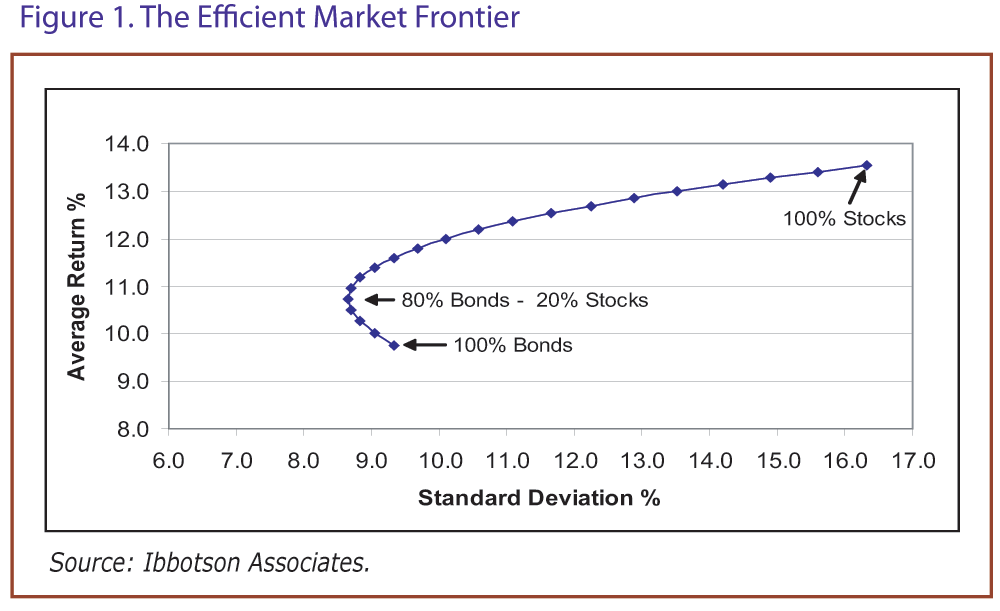
5.5% is a decent dividend for any stocks and the fact that STI is one of the top dividend yield index in the region may just be because of HPH Trust! However, does it justify a place in my portfolio after all? I'll be using a concept I've learnt in my FIN3101 class (hello Prof Ruth!) - the Modern Portfolio Theory. 

I'm not going to explain in details about this concept, but in general it is about using diversification to bring the risk of a portfolio down to your acceptable level and get the best expected returns, through varying the weights of your portfolio components. 

To cut to the chase, I had actually found that by removing HPH Trust from my portfolio, the standard deviation or risk of the portfolio did not change and it was actually accompanied by a marked increased in expected mean return of the portfolio. This essentially signified that HPH Trust did not contribute to my portfolio in terms of risk and was actually detrimental in terms of expected returns. 

This was actually my first time using this method to analyze my portfolio and I was excited to find out about this fact! The photo below shows my calculation and any guru that may come by this humble blog can double check my workings. 


Seeing that future dividends are going to be cut and finding out that HPH Trust is useful in my portfolio, I have decided to sell this stock. Queued at US$0.465 all day to no avail, I will continue to try tomorrow or at least in the immediate term. 

Monday, 4 April 2016

My Stock Holdings (March 2016)

After a long wait, I can finally sit down and count my gains for the month of March! With the Singapore stock market in the doldrums for the first two months, there were finally some rebound even though I did not enter anything prior to it. However, as I also did not let go of any stock, it meant my portfolio clawed back some gains.

This also highlighted how investing is actually advantageous to constant trading. According to this article, missing just the best ten days of S&P in the period between 1993-2013 will cost the investor a 3.8% drop in annualized returns. While many will argue that trading is better as one can let go of stocks at the highest and buyback at a lower point, I can assuredly say that I neither have the skills nor the time. Hence, as a student and eventually a working adult, passive investing will still be the way to go.

On the matter of dividends, I received a total of $227.42 for the month of March. This amount was disbursed from HPH Trust, SingPost and Karin Tech. Hence for the first three months, the total dividends received comes up to $261.57, a little over a quarter of my dividend goal this year.

Also, I had bought GLP on 31 Mar 2016 for a cost of $1.955. A little high, but through the average of valuation methods which I may subsequently write about,  the fair value price of GLP I came up with was actually $2.42. Coupled with GIC being the majority shareholder, I feel that there is some merit to the purchase of GLP. With the addition of GLP, the breakdown of my portfolio is shown below. Let's hope 2016 is a good year for all in the stock market =)


Tuesday, 1 March 2016

My Stock Holdings (February 2016)

Whew, busy month with Design Project, FYP Presentation, projects, tutorials, midterms. For record sake's, I have come online to record this short entry of my stock holdings in February. Whilst the market condition is still bad, there is a restoration of stability and hence marginal growth.

In the month of February, Keppel Reit has declared a dividend of $0.0168 per share. I chose to reinvest this dividend through the DRP. While filling up the form, I realised that I can allocate the shares I own to either 1) Receive the cash dividend OR 2) Receive new shares. Knowing this, I can allocate some of my share to receive cash dividend while still receiving the same number of new shares. This is possible because there can be no shares lower than 1 and is thus rounded down. Might as well use this spare shares to receive the cash dividend! The amount is not huge, but I hate to give away free money.

Therefore, the first dividend I received this year will be $34.15. The start to my $1000 dividend aim for this year. Below is my stock holdings at the end of February. Noticeably, HPH Trust has fallen in overall value to stand below Keppel Reit.


PS: I finally found a job!